
Staging for Golden-Hour Photos: Our Hot Tub and Fire Pit Setup
Every hosting guide says to shoot your listing during golden hour and stops there, as if soft light alone fixes a photo. It does not. We learned that the slow way, standing in the yard at Jay with perfect light and a hot tub that still looked like an afterthought in every shot, because nobody had actually staged it. Good light exposes bad staging just as clearly as it flatters good staging. Here is what we actually do differently now.
TL;DR
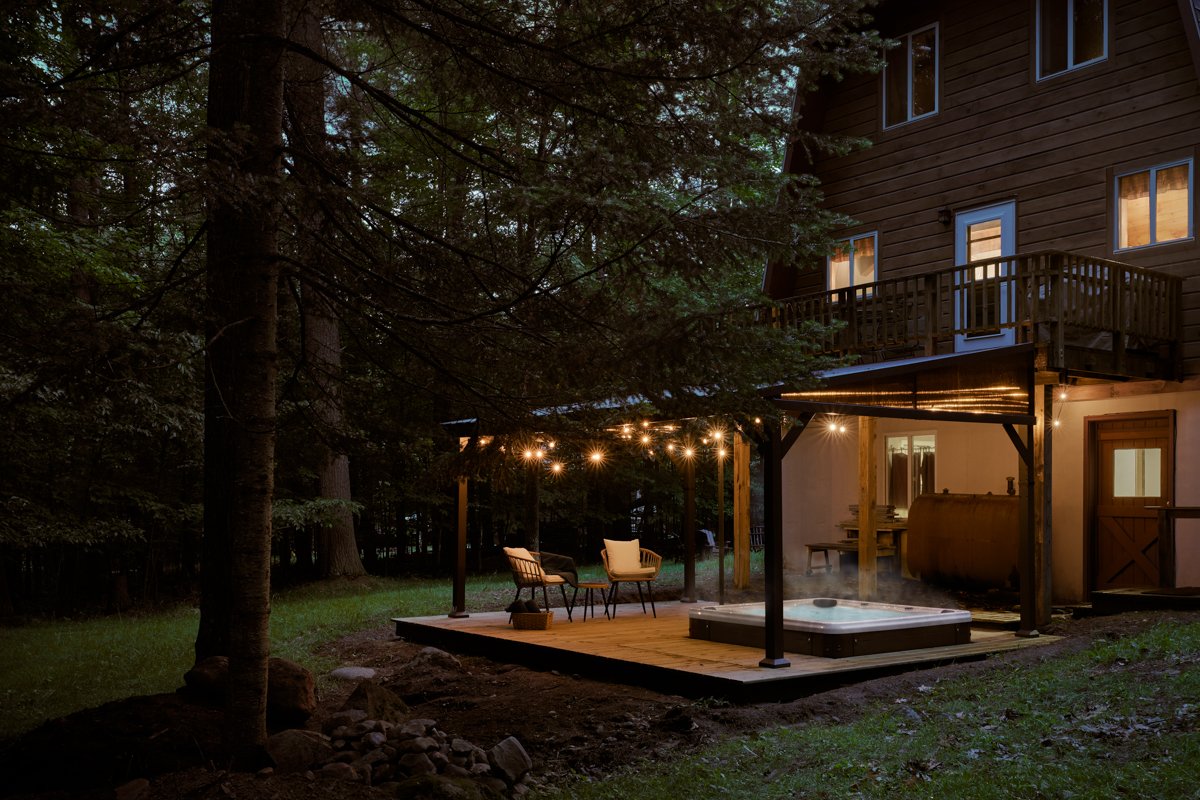
Golden hour gives you the light. Staging is what actually makes a hot tub or fire pit photo worth pinning and booking from. Our setup: towels and robes visibly ready (not just available), the hot tub running so steam is visible in the shot, string lights on before the sky goes fully dark, and the fire pit lit early enough to have real flame by the time the sky hits that deep blue twilight color. Professional photography can lift booking rates by as much as 40% in 2026 data, but staging is free and comes first regardless of who holds the camera.
Jump to: Why Staging Matters More Than the Light · Hot Tub Staging, Step by Step · Fire Pit Staging for Twilight · Getting the Timing Right · When a Phone Is Enough, and When It Is Not · FAQ
Why Staging Matters More Than the Light
Golden hour is genuinely useful. Soft, warm, low-angle light is more flattering than flat midday sun, and it photographs a cabin exterior beautifully almost by default. The mistake is treating that light as the whole strategy. A hot tub with its cover half on, no towels visible, and water that has not been running long enough to steam looks like exactly what it is: a hot tub nobody prepared for a photo. The light does not fix that. It just shows it more clearly.
The specific photo that changed our approach was an early hot tub shot from our first season. Technically well lit, taken right at golden hour, and it still underperformed every other exterior photo in terms of guest engagement once we could see the data. Looking back at it honestly, the cover was askew, no towels were visible, and the water looked still and flat rather than inviting. Good light on a poorly staged scene just produces a well lit photo of something unappealing. It took us longer than it should have to separate those two variables.
This matters for bookings specifically, not just aesthetics. 2026 data on Airbnb listing photography puts the booking rate lift from genuinely professional-quality photos at up to 40%, and listing titles built around the experience, “mountain retreat with hot tub and sunset views” style framing rather than a bare bedroom count, are outperforming generic descriptions in the same data. Staging is the free half of that equation. You do not need a professional photographer to stage well. You need a checklist and about twenty minutes before the shutter clicks.
Hot Tub Staging, Step by Step
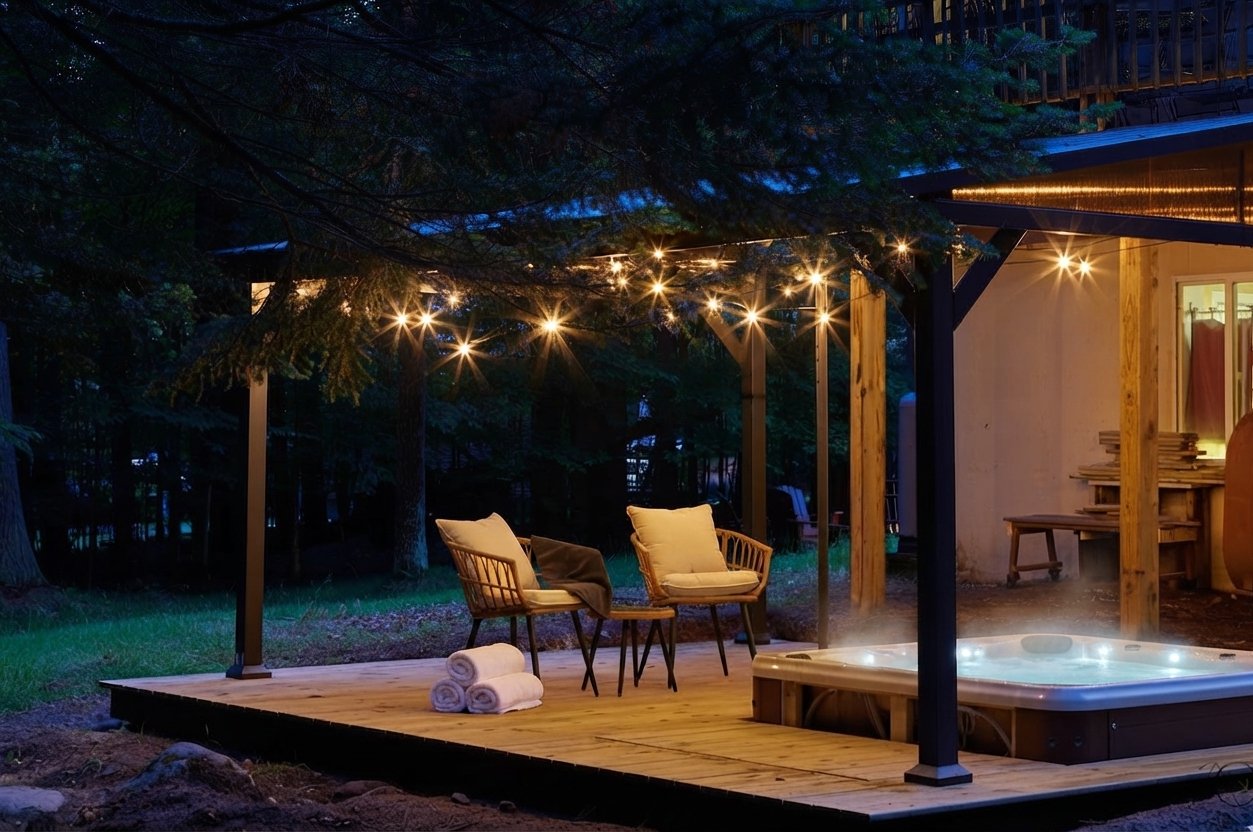
- Run the hot tub at least 20 minutes before the shoot. Visible steam against cool evening air is most of what sells the “we could be in there right now” feeling, and steam does not appear on demand. It needs lead time.
- Stage towels and robes as if a guest just stepped out, not folded in a closet. One towel draped over the edge, one robe hung nearby, reads as lived-in and ready. A perfectly empty deck reads as unused.
- Clear the cover fully, and check the water for anything floating. Obvious, and still the thing we forget most often under time pressure.
- Add one small deliberate detail. Two glasses, a small side table with a candle, something that suggests an experience rather than just equipment. Do not overdo this. One detail reads as staged intentionally. Five reads as cluttered.
- Check the water clarity earlier in the day, not right before the shoot. If the water needs a filter change or a shock treatment, that takes hours to clear properly. Discovering cloudy water twenty minutes before golden hour means the shoot does not happen that day.
Fire Pit Staging for Twilight
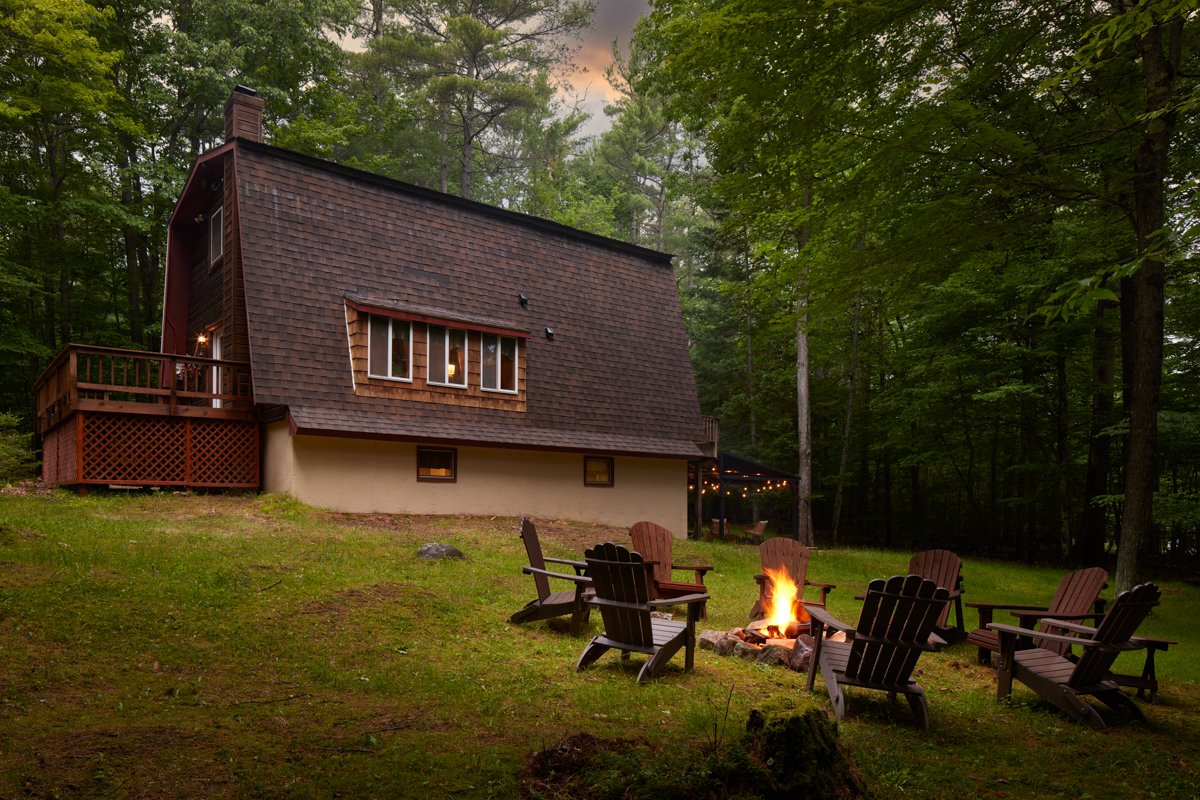
The fire pit shot lives or dies on timing more than the hot tub does. Light it too early and you get a fire with no visual drama against a still-bright sky. Light it too late and you are fighting to get the flame established before it is fully dark and the shot loses the twilight blue that makes these photos pop. We light it roughly 15 to 20 minutes before we actually want to shoot, so the flame is established and consistent rather than just catching.
Seating arrangement matters here too. Chairs angled slightly toward the camera rather than in a strict circle facing only each other photograph better, since a strict circle puts the backs of chairs toward the lens in at least one useful angle. We also learned to keep firewood stacked neatly and visible nearby rather than out of frame entirely. An empty-looking fire pit with no visible fuel source reads as staged in the wrong way, like a prop rather than something actually used, and guests have specifically commented on the visible woodpile as part of what made the space feel genuinely usable rather than decorative.
The contrarian take: the “wow” fire pit and hot tub photos that get pinned and shared are almost never the ones taken in full darkness, despite that being the moodiest-looking option in person. Twilight, the window where the sky still holds color and artificial light has something to contrast against, outperforms full dark almost every time. Full dark photographs as a black rectangle with a bright spot in the middle. Twilight photographs as an experience.
The Staging Kit We Keep On Hand
Save this list. Having these items ready and clean, stored specifically for staging rather than general guest use, cuts the actual staging window down to about 20 minutes instead of an hour of searching for what you need.
- Two matching towels and one robe, kept separate from the guest linen closet specifically for staging shoots
- A small side table or tray for the “one deliberate detail” (candle, two glasses, a small plant)
- A stocked, visible firewood supply near the fire pit, not tucked out of frame
- String lights on a timer or smart plug, so they can be turned on remotely a few minutes before the shoot without someone standing there flipping a switch on camera
- A lint roller and a squeegee, for the hot tub cover area and deck boards. Water spots and stray debris show up far more in photos than they do in person
In practice, this means starting hot tub and fire pit prep about 30 to 40 minutes before official golden hour ends, not at golden hour itself. By the time steam is visible, towels are staged, the fire is established, and you have walked the whole scene once to check for stray clutter, you have used most of that window already. We now treat the actual shoot as the last five minutes of a 30-minute staging process, not a moment we walk into cold.
Golden Hour Timing Changes Completely Across Four Seasons
This is the detail that generic staging advice never covers, because most of it is written for a single climate, not a property that has to work in ski season, lake season, foliage season, and mud season within the same year. At Jay, golden hour in December hits around 4pm, which means staging has to happen in the middle of a short winter afternoon, often in genuinely cold temperatures that make lingering outside to adjust a towel or check a flame less pleasant than it sounds. In July, golden hour stretches toward 8pm, giving a much longer, more comfortable staging window, but also meaning the fire pit and hot tub shoot competes with bugs and the general chaos of a longer guest-occupied evening if the property is actively booked.
Winter staging has its own specific wins, though. Steam off the hot tub against genuinely cold air is more dramatic than the same steam on a mild summer evening, and a lit fire pit against snow reads as cozier than the identical setup in July. If your property is seasonal the way ours is, it is worth staging and shooting more than once a year rather than relying on a single golden-hour session to represent every season a guest might book into.
When a Phone Is Enough, and When It Is Not
Staging is free. A professional shoot is not, and it is worth being honest about when each is the right call. We wrote a full breakdown of that decision, including our actual photographer quotes versus AI editing costs, in our AI photo editing versus hiring a photographer cost comparison. The short version relevant here: a well-staged golden-hour hot tub or fire pit shot taken carefully on a phone can genuinely compete with a mediocre professional shot that skipped staging. What a professional brings that staging cannot replace is proper low-light equipment for a scene that is, by definition, shot in fading light, which is exactly where phone cameras start to struggle most.
Who this is NOT for: if your hot tub or fire pit is not a genuine draw for your listing (no view, no real evening ambiance, purely functional), staging effort is better spent elsewhere. This is specifically for hosts whose outdoor feature is meant to be a selling point, not just an amenity checkbox.
FAQ
How far in advance should I start staging before golden hour?
About 30 to 40 minutes before you actually want to shoot, so steam, fire, and lighting all have time to establish properly instead of looking rushed.
Do I need a professional photographer for this specific shot?
Not necessarily. Staging matters more than equipment for a hot tub or fire pit shot specifically. A professional helps most with low-light technical challenges, not with the staging itself.
What is the single most common staging mistake?
Shooting the hot tub before it has been running long enough to produce visible steam. It is the detail that sells the experience, and it cannot be rushed.
Does this apply to daytime photos too?
Some of it. Towel and detail staging applies any time of day. The specific timing advice here is about golden hour and twilight shots, where light changes fast and staging has to be ready before the window closes.
How often should we reshoot the hot tub and fire pit photos?
At least once per season if the property genuinely looks different across seasons the way ours does. A single summer photo set does not represent what a winter guest will actually experience, and a winter-only booker deciding based on a summer photo is a mismatch that shows up in reviews later.
Next: if you are deciding whether a professional photographer is worth it for your golden-hour shots specifically, read our full cost comparison, or start from the beginning of this Host Journal series.
Pin This
Sources: Airbnb listing photography tips, 2026, Airbnb design and staging trends, 2026.