
Why We Ripped Out the Tub (Part 1: Demo Day)
The tub in the Jay house’s main bathroom had been on my mental list of “things to deal with eventually” for over a year before we actually touched it. Not because it was broken. Because every single turnover, whoever was cleaning had to crouch inside it with a scrub brush, and every single guest review that mentioned the bathroom at all mentioned the shower pressure being weak because it was fighting a tub-shower combo diverter that had seen better days. Eventually became now. This is Part 1 of a four-part series on that renovation, starting with the day everything came out.
Before & After
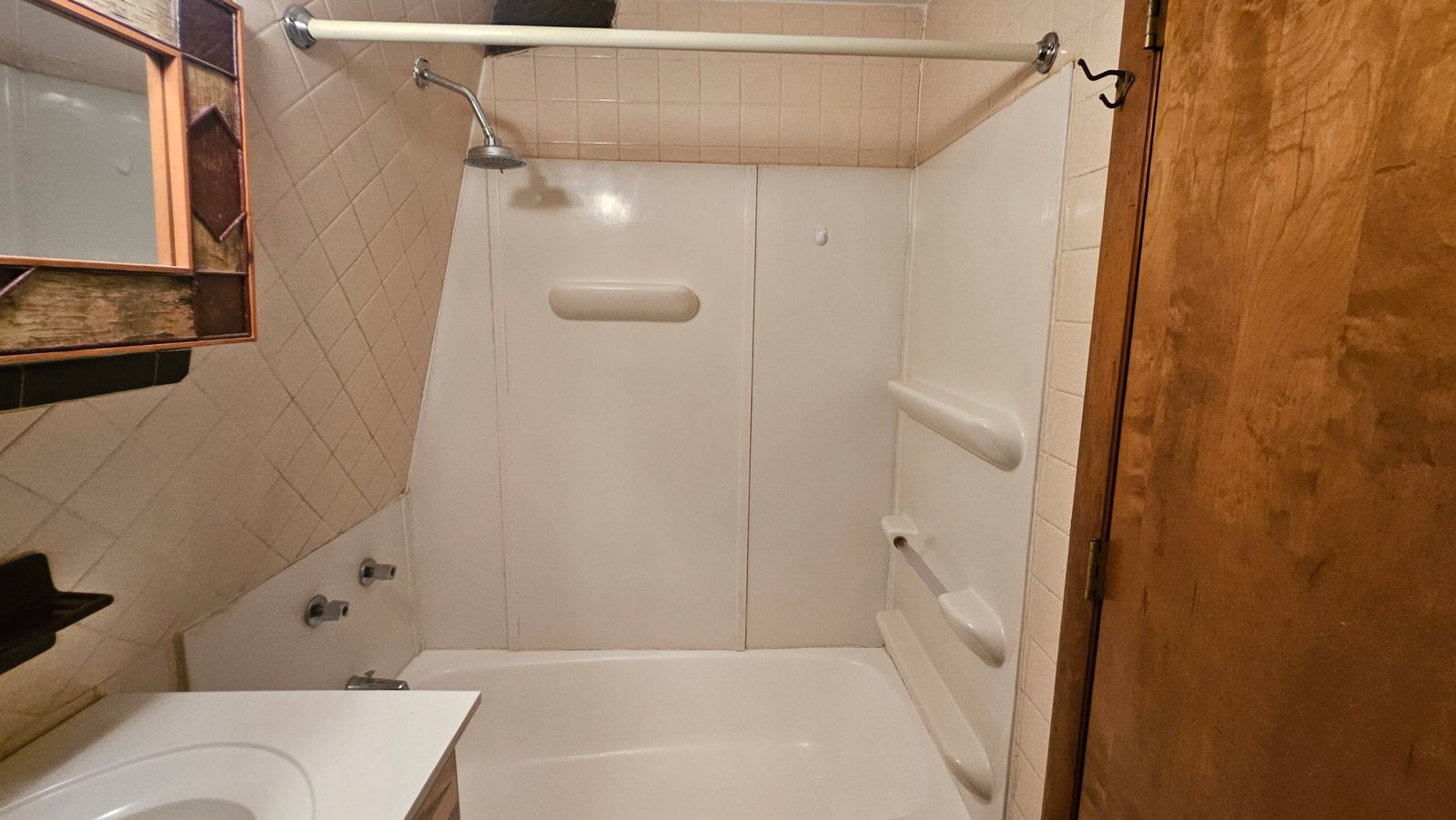
Before: the original tub-shower combo
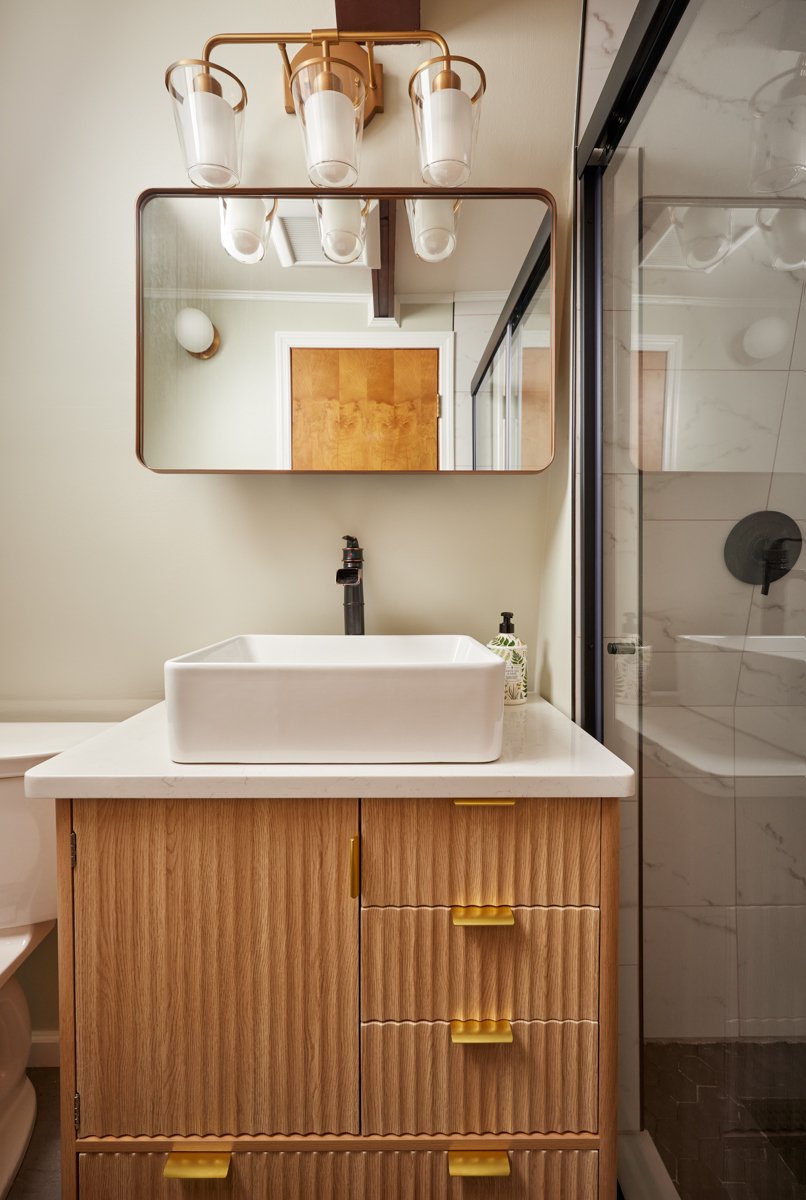
After: the finished vanity and walk-in shower
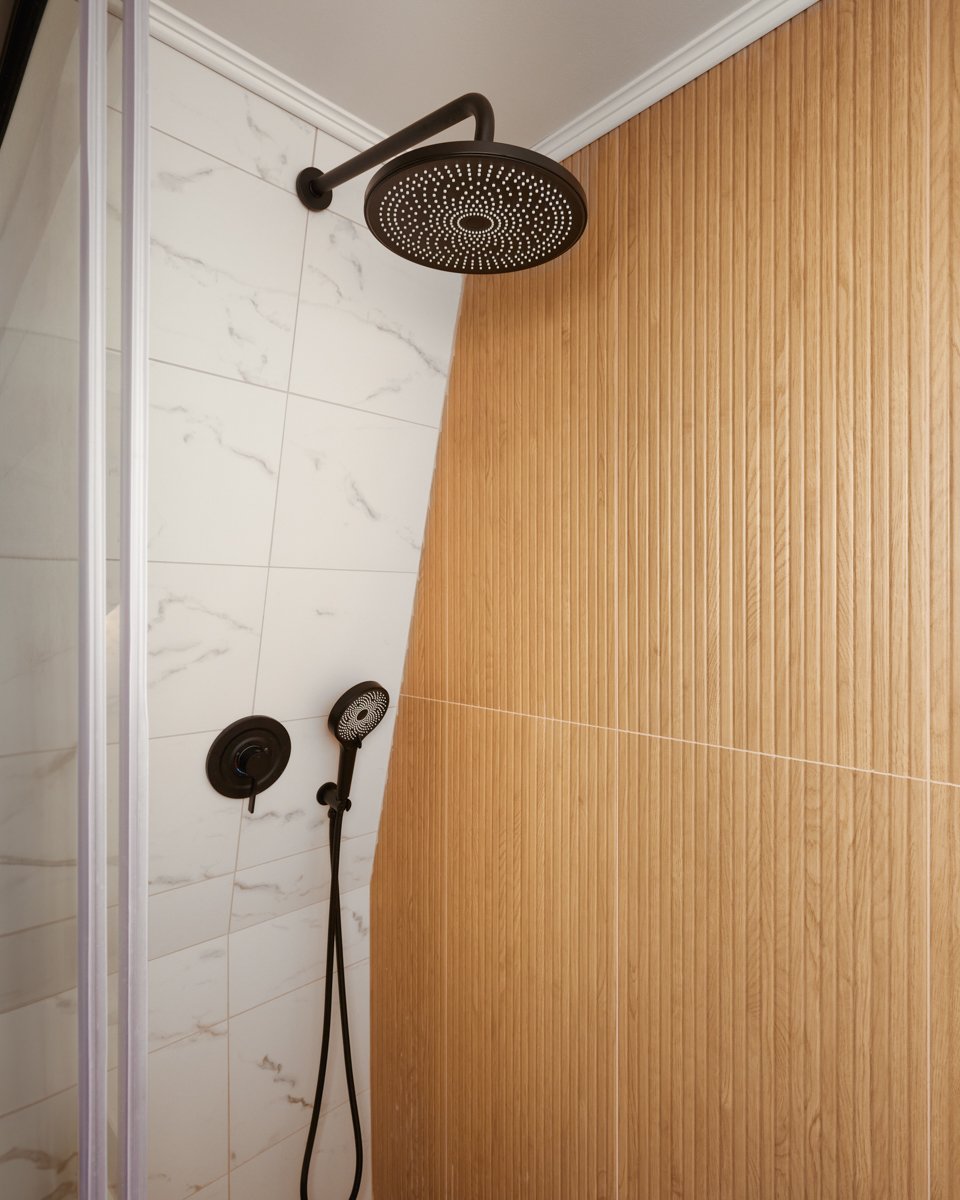
Shower head detail

Niche shelf detail
This is where the full renovation ended up. Part 1 below covers demo day specifically. Tile, fixtures, and the rest of the finish work are covered in Parts 2 through 4 of this series.
TL;DR
We are converting the Jay house’s main bathroom from a tub-shower combo to a walk-in shower, and the decision was driven by short-term rental economics as much as style. A tub adds real minutes to every single turnover clean, and industry data on tub-to-shower conversions in 2026 puts typical project costs at $2,000-$12,000 depending on scope. Demo day removed the old tub, the surrounding wall tile, and the vanity. Materials spent so far: a few hundred dollars in disposal and demo supplies, with tile, the shower pan, and fixtures still ahead. Part 2 covers choosing tile.
Jump to: Why Convert a Tub to a Shower in an STR · What Actually Happened on Demo Day · Running Budget So Far · FAQ · What’s Next
Why Convert a Tub to a Shower in an STR, Specifically
This is not a generic “tubs are outdated” renovation. The reasoning is specific to running a short-term rental, and it comes down to three things.
- Turnover cleaning time. A tub takes meaningfully longer to clean properly than a shower pan, and on a same-day turnover, every extra minute is a minute that pushes the next guest’s check-in closer to being late. Multiply that by every single turnover for the life of the property, and it adds up to real, recurring cost, not a one-time inconvenience.
- Guest preference, not just ours. More than half of homeowners now prioritize a larger shower over keeping a tub, according to 2026 renovation trend data, and our own guest reviews backed that up locally. Nobody was requesting the tub. Several people mentioned wishing the shower were easier to use, and at least one review specifically called out fighting with the diverter to get consistent water temperature, which is about as direct a signal as a host ever gets.
- Maintenance reality. Tub-shower combo diverters fail in ways that are annoying to diagnose remotely. A dedicated shower valve is simpler hardware, easier to diagnose and replace, which matters a lot when the person fixing it is two hours away at a day job when it breaks and a guest is standing in a cold bathroom waiting for an answer.
The contrarian take: most renovation content frames tub removal as a resale-value risk, since some buyers want at least one tub in a home. That calculus does not apply the same way to a short-term rental. Our buyer, in a sense, is a guest booking a few nights, not a family shopping for a forever home, and that guest overwhelmingly wants a great shower over a tub they will not use.
What Actually Happened on Demo Day
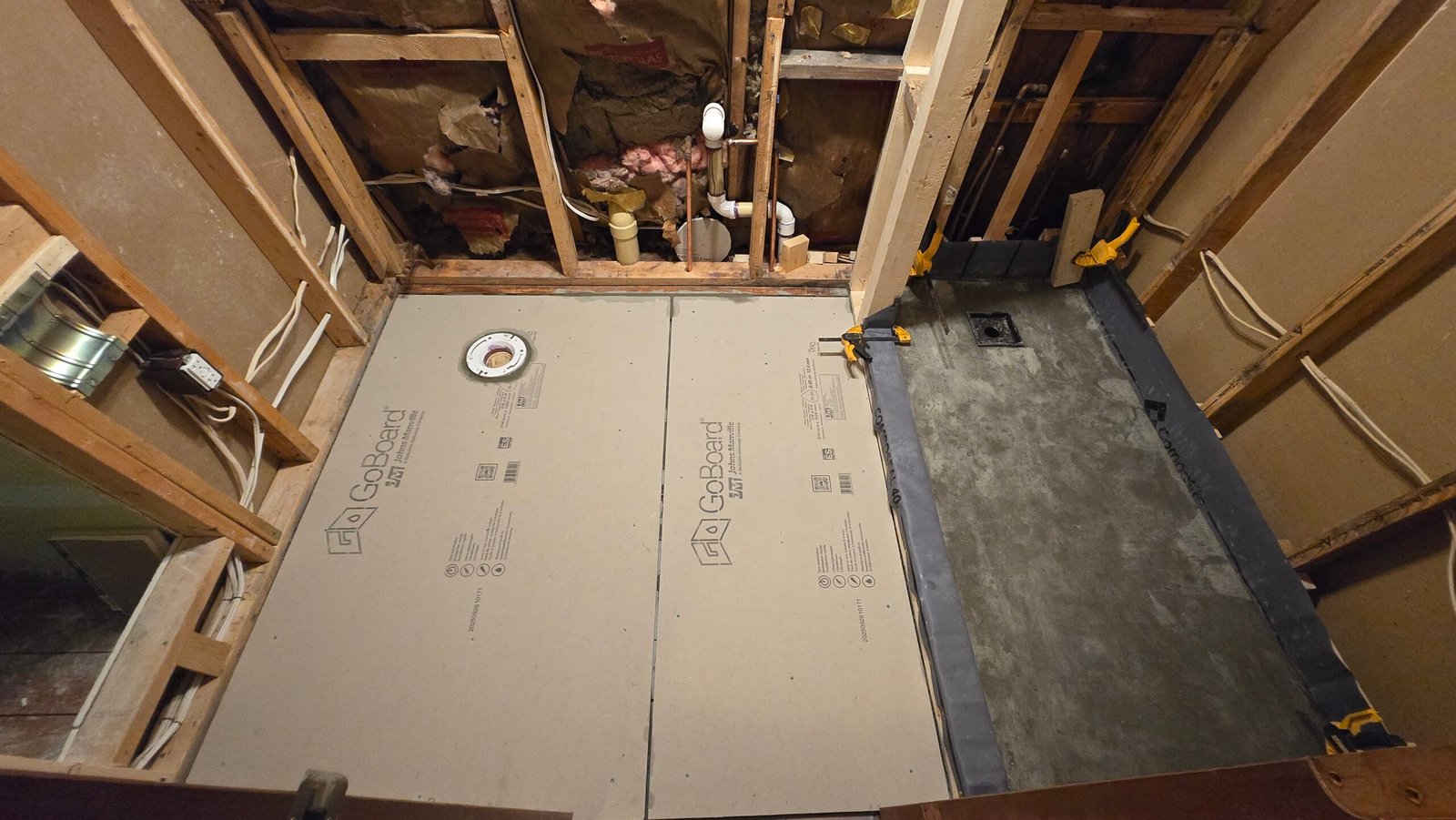
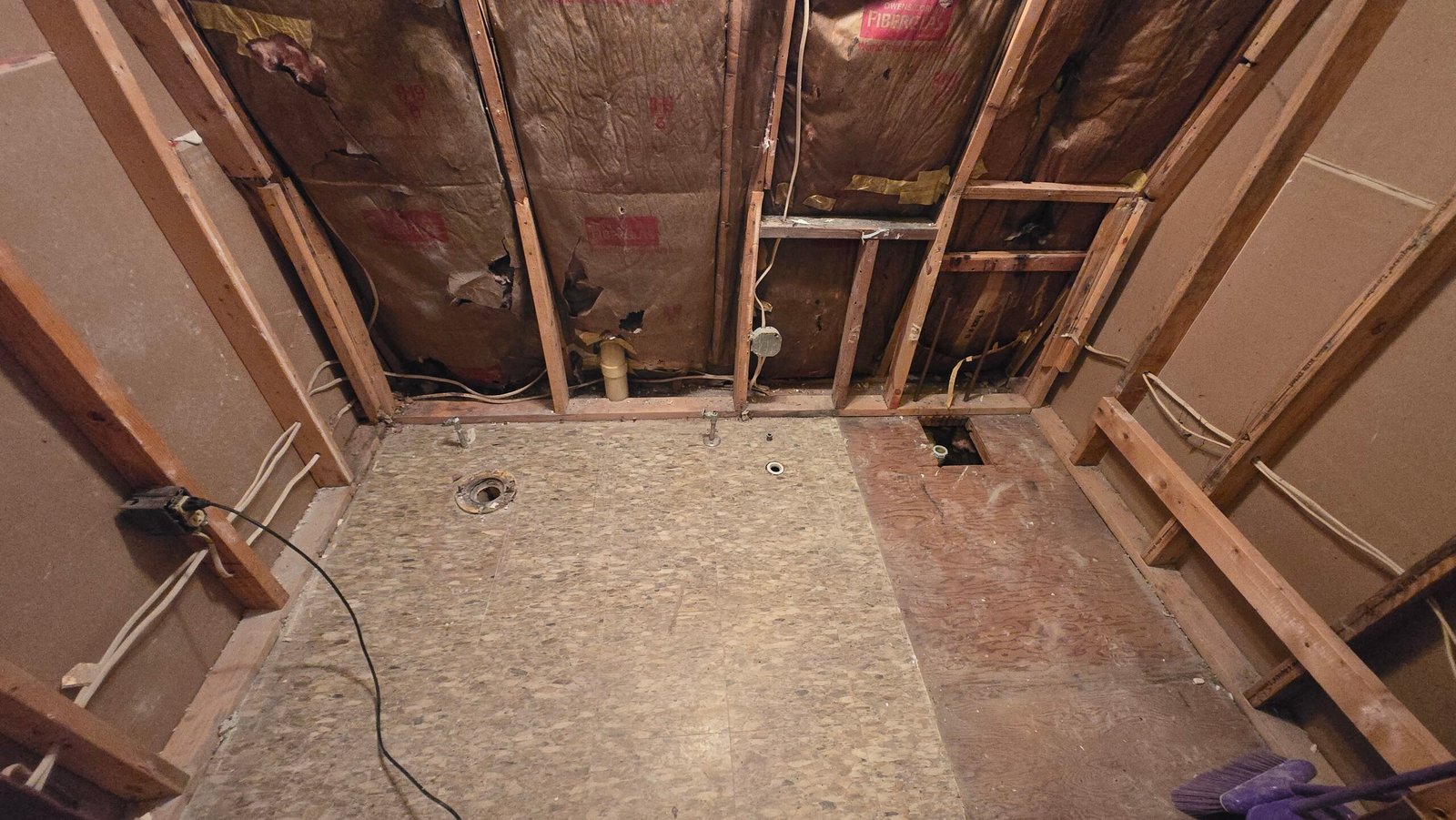
Byunghun did the physical work himself, which is how most renovation work happens at Jay. The scope for day one: pull the old tub, strip the surrounding wall tile down to the studs, and remove the vanity so the whole space could be reworked as one project instead of patching around fixtures that were staying.
The tub came out in worse shape than expected underneath. Nothing structurally alarming, but enough water staining on the subfloor around the drain to confirm the old caulk line had been failing quietly for a while, invisible from the guest-facing side. That is a detail worth naming honestly: a bathroom can look completely fine in listing photos while something underneath it has been slowly getting worse. Demo day is often when a renovation project’s real scope becomes clear, not when it is originally planned.
The wall tile removal was the more physically brutal part of the day. Old tile adhesive does not want to let go, and there is no shortcut for that beyond time and a pry bar. The vanity came out last and easiest, mostly because it was not tiled in. Behind it, we found the original shutoff valves had been painted over at some point, functional but stiff enough that they needed real effort to turn, which is now on the list of small fixes to handle before anything gets closed back up. That is the kind of thing you only find by actually opening a wall. It would never have shown up on a pre-renovation walkthrough.
By the end of the day, the bathroom was down to studs and subfloor, and the framing underneath looked solid everywhere except the water-stained section by the drain. That is a genuinely good outcome for a demo day. Structural surprises are the expensive kind. A stained but sound subfloor is a repair, not a rebuild.
Protecting the Rest of the Listing During Demo
One thing that does not show up in most renovation content, written for owner-occupied homes, is that a short-term rental still has to look presentable in its listing photos and to a cleaner or maintenance visitor even while one room is fully torn apart. Tile demo produces a genuinely surprising amount of fine dust, and it travels. We sealed the bathroom doorway with plastic sheeting before a single tile came off the wall, not as an afterthought but as step one, specifically so dust did not migrate into the hallway and bedrooms that were still technically part of an active listing during the blocked window.
That sounds like a small detail. It is not, in practice. A guest-facing hallway with a fine layer of tile dust in it reads as neglect in a photo, even if the actual bathroom work is going well. Protecting the rest of the space is part of the renovation, not separate from it, when the property is a rental and not a home you are only renovating for yourselves.
Timing a Renovation Around Actual Bookings
The part generic renovation content never addresses: when do you actually do this work on a property that makes money every night it is bookable? We blocked the calendar for a stretch of the slower shoulder season rather than pulling the listing during ski season or peak summer, which meant demo day happened with a real, specific deadline attached, not an open-ended “whenever we get to it” timeline. That deadline pressure is not a downside. It is what keeps a DIY renovation from sprawling indefinitely, which is a real risk when the people doing the work also have full-time jobs and three other properties competing for their time.
We also made a point of blocking more calendar time than we expected to need. The subfloor surprise below is exactly why. A renovation with zero schedule buffer turns one unexpected problem into a missed check-in, and that is a much more expensive mistake than a few extra blocked nights.
Running Budget So Far
| Item | Status | Notes |
|---|---|---|
| Demo and disposal supplies | Spent | A few hundred dollars, materials only. Labor is Byunghun’s own time, not a paid line item. |
| Subfloor repair (water staining found on demo day) | Ahead | Not originally budgeted. Exactly the kind of surprise demo day tends to reveal. |
| Tile | Ahead | Covered in Part 2. |
| Shower pan, valve, fixtures | Ahead | Still being priced out. |
For context on what a project like this typically runs: industry data on 2026 tub-to-shower conversions puts the typical range at $2,000 to $12,000, with the largest cluster of homeowners spending $5,000 to $10,000. A DIY-heavy approach like ours, where labor is Byunghun’s own time rather than a contractor’s, tends to land toward the lower end of that range, but the exact final number will not be clear until fixtures and tile are actually purchased. I will update this figure honestly as the series continues rather than estimate a final total prematurely.
What We’d Tell a Host Considering the Same Conversion
- Check under the tub before you commit to a timeline. Our subfloor surprise is common enough that it should be treated as a real possibility, not an edge case. Build schedule and budget slack for it.
- Block calendar time deliberately during your slowest real stretch, not just “sometime.” A specific window creates useful pressure. An open-ended one tends to expand.
- Decide on tub-versus-shower based on your actual guest data, not general trend pieces. Ours pointed clearly toward a shower. A property in a different market, with a different guest mix, might genuinely land differently.
- Price the full scope before demo, not just the parts you can see. Tile, shower pan, valve, and fixtures add up fast, and pricing only the visible tub removal will make the project look cheaper than it actually is.
Who This Series Is NOT For
If you are looking for a professionally contracted renovation timeline with a fixed quote and a crew, this is not that story. This is a real, DIY-heavy renovation happening around two full-time jobs and three other properties, which means the timeline is realistic rather than fast. If that is not useful to you, a contractor-quoted renovation guide will serve you better than this series. What you will get here instead is the actual sequence, the actual surprises, and real numbers as they happen, updated honestly rather than smoothed into a tidy before-and-after.
FAQ
Why not just re-tile around the existing tub instead of removing it?
We considered it, but the water staining found on demo day meant the wall and subfloor needed real attention regardless. Once that much was already being opened up, converting to a shower stopped being extra work and started being the more sensible use of an already-open wall.
Is a tub-to-shower conversion a bad idea for resale value?
Possibly, for a primary residence sold to a family buyer. For a short-term rental, the audience is a guest booking a few nights, and that audience overwhelmingly prefers a great shower over a tub, based on both industry data and our own guest feedback.
How long did demo day actually take?
A full day for one person working alone, tub, tile, and vanity combined. Tile removal was the slowest part by a wide margin.
What was the biggest surprise?
The subfloor water staining. It was not visible or suspected before the tub came out, and it is now part of the project scope.
Did you keep the property bookable during any part of this?
No, we blocked the calendar for the full renovation window rather than trying to work around active guests. Given the dust and noise involved in tile demo specifically, trying to do this with guests still checking in would have been a worse guest experience and a slower renovation.
What’s Next
Part 2 covers choosing tile, including how we narrowed down options for a space that needs to photograph well for listing photos and hold up to short-term rental turnover cleaning at the same time. That post is not live yet. This series continues from Part 1.
Sources: 2026 tub and shower remodel trends, tub-to-shower conversion cost guide, 2026. Our own budget figures above are our real running costs to date, materials only, not a contractor estimate.